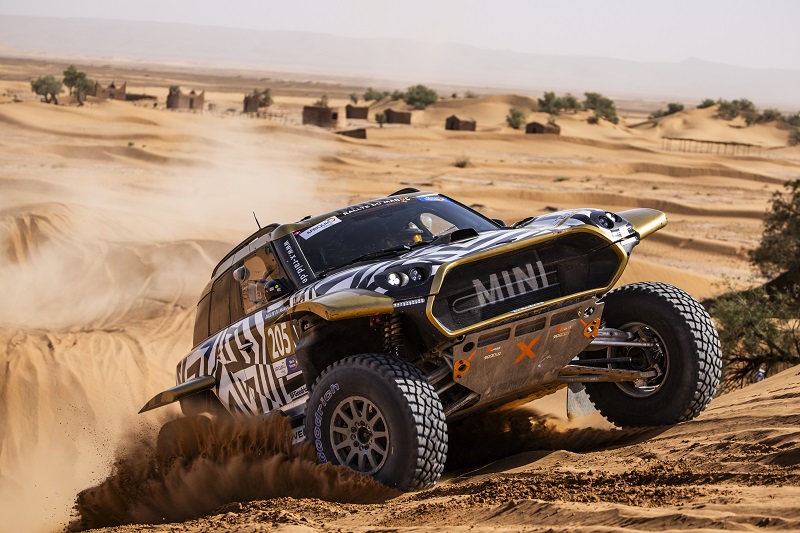
To ensure a level playing field, the FIA will begin using torque meter sensors for T1+ cars starting next year. It is among a series of changes to the Cross-Country Rally Sporting Regulations ahead of the 2025 season.
A torque sensor is currently used in most major FIA series, particularly the World Endurance Championship’s Hypercar and LMGT3 classes. It is installed on the driveshaft and measures, as the name suggests, the vehicle’s torque and outputs information like power output. This data is then relayed to the FIA to see which cars are faster than what is permitted under Balance of Performance (BoP) regulation.
The World Rally-Raid Championship had a similar policy to BoP called Equivalence of Technology, which was intended to make competition between the gas-based T1+ and electric T1.U subcategories more fair. EoT and T1.U regulations altogether were quietly dropped after Audi, the lone manufacturer in the class, shuttered its rally raid program following victory at the Dakar Rally.
Torque meters are enshrined in Article 13.3 of the CCR regulations, stipulating their use to “monitor powertrain performance is mandatory for T1+ vehicles entered for FIA Platinum or Gold priority drivers.” Platinum drivers are those who finished top three in the last two W2RC standings and the overall winners of the last five Dakars, while Gold drivers include those registered for the manufacturer’s championship, all W2RC race winners since 2023, victors of the last ten Dakars, Dakar stage winners and top-five finishers in the five latest editions, Challenger and SSV champions since 2023, and the 2024 World Baja Cup top three. Of the 25 drivers with either designation, 19 are entered in the 2025 Dakar in the premier Ultimate class and in a T1+ car.
Anyone who is unable to install the meter for “technical reasons” are required to send a technical dossier to the FIA before registration closes for the race they are entering.
The sensor works fairly similar to EoT, basically setting maximum powertrain output for each T1+ vehicle depending on how it is faring so that each has relatively comparable performances. Article 13.3.5 states the FIA Technical Delegate can permit changes to the torquemeter control strategy “at any time including during rallies.”
If a driver exceeds the max output, they receive a 10-second penalty for each of the first five infractions. This is bumped up to 30 seconds apiece for the sixth through tenth penalties. Should they still not get it figured out after that, they get ten minutes added to their total time.
The change was approved by the FIA World Motor Sport Council in Rwanda ahead of last weekend’s awards ceremony. Other rule changes included the removal of specs for SCORE International-eligible T1 cars and refining the points system for the FIA Baja Cups, the latter now handing out a point to teams that fail to finish along with points for the top five in each stage. Stage points are already awarded in the W2RC.
Featured image credit: Julien Delfosse / DPPI
 131 Off-Road
Leave a comment