
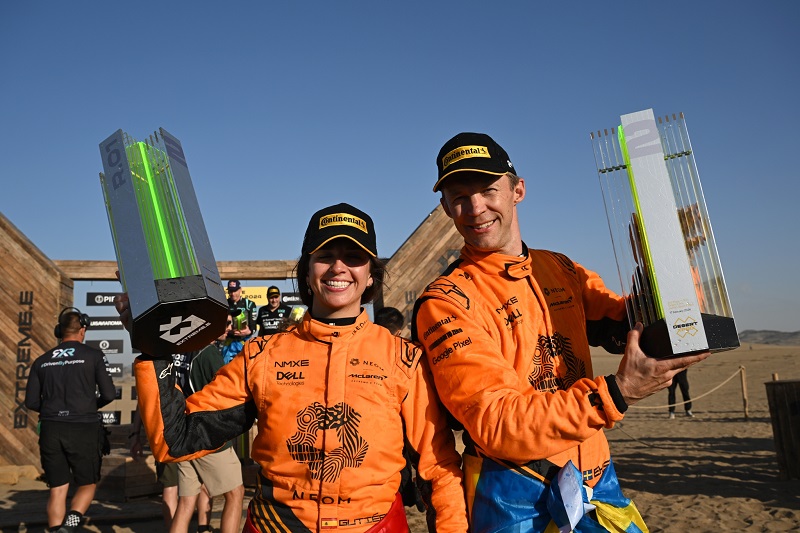
Extreme E (set to become Extreme H) has long emphasized the importance of gender quality, which it enforces by requiring each team to have one male and female driver apiece.
Since the inaugural season in 2021, men have typically been faster than their counterparts. However, the margin between the genders has gradually narrowed with each season. Data from the Continental Traction Challenge at each race found that men were faster by 4.5 seconds on average in 2021, but that gap was sliced down by nearly 69 percent by 2024 to just 1.1 seconds.
The shortened 2024 season also saw the greatest margin reduction, decreased by 36.5%. By comparison, the gap fell by 29.76% in 2022 from the year before, then another 29.67%.
At the most recent round, the Hydro X Prix, men won average were faster by just 0.61 of a second.
Teams tend to deploy their drivers such male drivers race against other men and the same for women, though it is not uncommon for mixed-gender laps to happen as well.
“Extreme E is a championship that has proven on track against a stopwatch what giving opportunity to drivers can do,” said Catie Munnings. She set the third fastest CTC time among all drivers regardless of gender during the 2024-opening Desert X Prix of 41.126 seconds, outpacing even those like the winners of both races that weekend.
“”When Extreme E started, a lot of the females had less experience than their male counterparts in their team. This data proves what opportunity and access to the best engineers and performance resources within top teams can really do for young drivers.”
Featured image credit: Sam Bagnall
 131 Off-Road
Leave a comment