
On Tuesday, the FIA released the first edition of its Cross-Country Rally Safety Guidelines, a booklet of rules and protocols for rally raid and baja organizers as well as the hosting FIA member clubs to follow.
The guidelines are divided into 13 chapters, which are then further split into tips on what the organizer should do:
- Type of event: Specifying if a race is a marathon, a rally raid, or a baja.
- Type of terrain: Whether a race is held on desert (Safety Type Open) or gravel (Safety Type Track).
- Selective Sections: Dictating how an organizer should oversee the SS. Subsections include how to run it in the dark, water hazards, and finding ideal locations for spectator viewing.
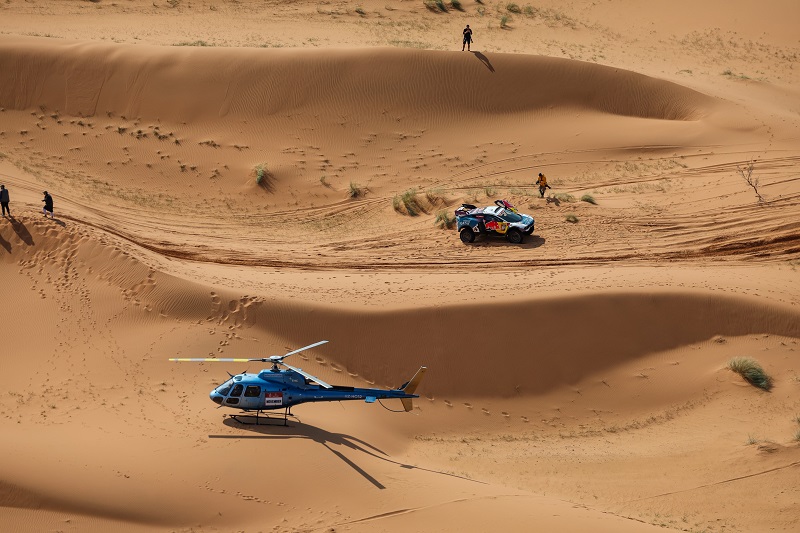
- Open safety specifications: Tips for the organizer to consider such as vehicle traffic and how the helicopter should fly when in the desert.
- Track safety specifications: Advice to ensure fans are safe as the race goes near cities and towns.
- Roadbook, signage, and waypoints: Organizers must clearly define all markings on the roadbook.
- Roadbook safety specifications: The roadbook creator is responsible for ensuring they are accurate and safe for all, like which areas should be designated as a neutralization or speed control zone.
- Route opening: Protocol for safety crews and organizers to begin the route, including what the Official Opening Car at W2RC races should carry.
- Medical and rescue services: Guidelines on what helicopters and ambulances should carry to rescue competitors in the event of an accident on course, as well as those in the bivouac and aircraft if they must be transported out of the race.
- Medical centers: Advice on what the bivouac’s medical center and the field hospital in the SS should have.
- Sweeper vehicles: Dictating the responsibilities of the sweeper crew, especially at night and during longer Selective Sections.
- Helicopters: Airspace and landing regulations for all helicopters whether they are medical, race control, or media.
- Tracking systems and comms: Outlining the basic requirements in radio and satellite communications systems between racers and officials.
“Cross-country rallying presents unique safety challenges due to its remote environments, long distances, and complex logistics,” explained FIA safety director Nuno Costa. “With the launch of the first edition of the guidelines, we are providing ASNs and event organizers with the practical tools and global best practices they need to address these realities more effectively. This will support organisers in raising safety standards across the discipline and will further strengthen the safety of competitors, officials, and spectators.”
The guidelines were created in a joint effort between the FIA Safety Department, their Road Sport Department, and their Closed Road Commission and Cross-Country Rally Commission. The CCRC oversees the sport itself while the other three specialize in coordinating with public authorities and ensuring public roads are safe for use by fans and racers.
They are to be used in tandem with the FIA Cross-Country Rally Sporting Regulations and Appendix H of the federation’s International Sporting Code.
“Cross-country rally is a discipline that continues to grow across the globe, attracting new organizers and competitors each season,” began Cross-Country Rally Commission head Jérôme Roussel. “These guidelines are a key step in ensuring that this growth is sustainable, giving organizers a clear framework to deliver events to the highest standards.
“By supporting ASNs and organisers with consistent, practical guidance, we can strengthen the future of the discipline while ensuring it develops in a safe and responsible way.”
The FIA oversees the World Rally-Raid Championship along with the World, European, and Middle East Baja Cups.
First edition of the FIA Cross-Country Rally Safety Guidelines
Featured image credit: Florent Gooden / DPPI / Red Bull Content Pool
 131 Off-Road
Leave a comment