
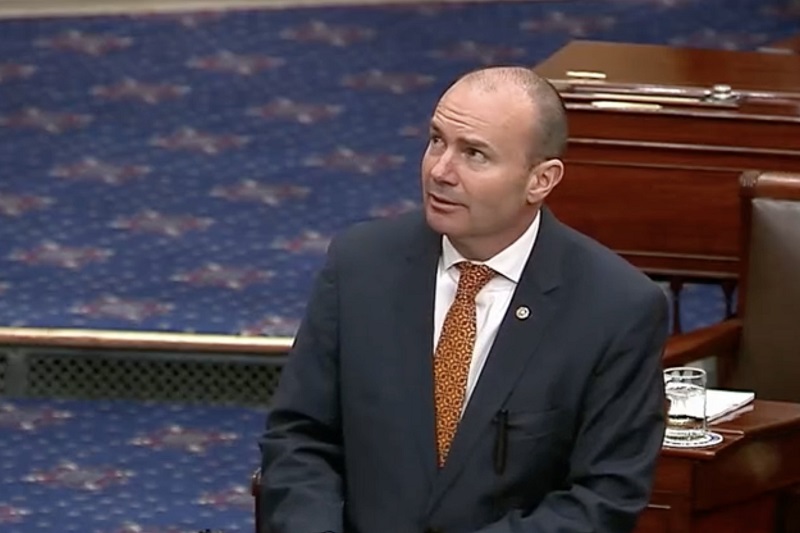
Mike Lee’s proposal to sell off millions of acres of public lands to build housing has officially been shelved. On Saturday evening, he announced he will not include the provision in the final Senate reconciliation bill.
The Utah Senator posted the following statement on Twitter:
Over the past several weeks, I’ve spent a lot of time listening to members of the community, local leaders, and stakeholders across the country. While there has been a tremendous amount of misinformation—and in some cases, outright lies—about my bill, many people brought forward sincere concerns. Because of the strict constraints of the budget reconciliation process, I was unable to secure clear, enforceable safeguards to guarantee that these lands would be sold only to American families—not to China, not to BlackRock, and not to any foreign interests.
For that reason, I’ve made the decision to withdraw the federal land sales provision from the bill.
I continue to believe the federal government owns far too much land—land it is mismanaging and in many cases ruining for the next generation. Under Democratic presidents, massive swaths of the West are being locked away from the people who live there, with no meaningful recourse. That has real consequences for Utahns—from raising taxes for schools and funding local search-and-rescue operations, to being able to build homes and sustain rural communities. President Trump promised to put underutilized federal land to work for American families, and I look forward to helping him achieve that in a way that respects the legacy of our public lands and reflects the values of the people who use them most.
I’m grateful to everyone who took the time to offer thoughtful feedback. Your voices helped strengthen this bill, and they will continue to shape the path forward.
The plan had sparked nearly bipartisan backlash since its introduction in mid-June due to the risk that these sales could prevent public access to areas under federal control, such as parks and off-roading trails. The BlueRibbon Coalition, one of the largest nonprofits dedicated to protecting public lands for recreational use, noted that the language in Lee’s proposal excluded various categories from being sold and that less than one percent of federal land would be targeted.
However, the Coalition also acknowledged the “risk to recreation access is high” unless the proposal was better clarified.
On June 24, Senate parliamentarian Elizabeth MacDonough invoked the Byrd Rule to remove the plan from the final bill. If Lee had pressed on anyway, he would have needed at least 60 votes in the Senate for it to be included, an unlikely event given there are only 53 Republican Senators and the skepticism from both parties. Idaho GOP Senator Jim Risch, for example, wrote he is “proud to help lead the effort to remove this provision from the One Big Beautiful Bill.”
Lee eventually updated his plan to cover smaller swaths of land, such as limiting it to land within five miles of population centers.
In the weeks from proposing it to Saturday, Lee repeatedly defended his plan by claiming its critics were bought off entities like the Chinese Communist Party. His aggressive and inflammatory rhetoric, which has become routine for him in recent years, has often led to as much mockery as condemnation.
“Americans from all corners spoke out in unprecedented numbers, showing that our public lands are common ground, uniting us in the fight to protect them,” stated The Wilderness Society president Tracy Stone-Manning. TWS had published an online map indicating which land would be eligible for sale under what was defined by the initial proposal. “Every member of Congress who listened and stood up to protect access to our favorite trails, fishing holes and camp sites deserves thanks. Future generations are counting on them to remain vigilant against any more attempts to sell off our public lands—including the threats that we know are coming from the administration. Now we turn to fighting back on the other harmful provisions of this bill, which aim to lease millions of acres to oil and gas corporations at rock-bottom prices.”
Featured image credit: C-SPAN
Leave a Reply